



ORGANS OF PARIS © 2026 Vincent Hildebrandt HOME ALL ORGANS




C1
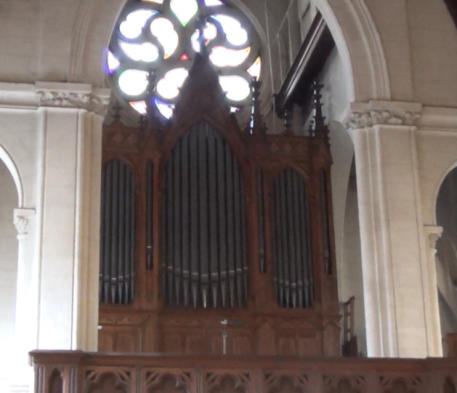
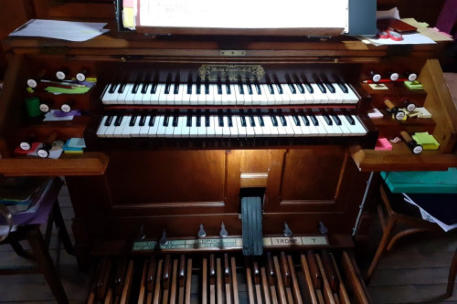
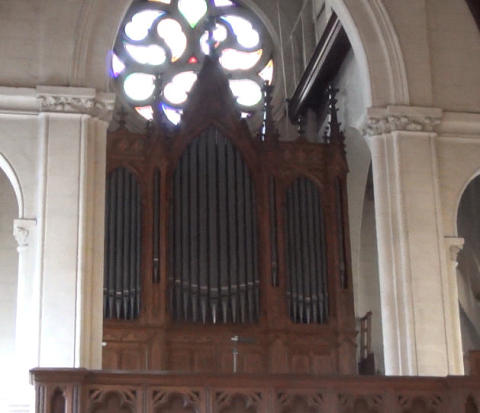
Built by the firm Cavaillé‑Coll / Mutin in 1910–1911, the
instrument remained entirely authentic until 1967, when
Erwin Müller added a Plein‑Jeu IV ranks.
In 1982 the organ builder Barberis carried out a major
overhaul of the instrument, which has been remarkably
preserved.
In 2016 the organ was restored by Yves Fossaert.

In the 1850s and 1860s, the district between Les
Invalides and the Military School had many
craftsmen. Many came from Germany or Alsace and
were Lutheran Protestant. Faced with this growing
demand, the pastor Eugène Berger opened a
primary school on Avenue Bosquet in 1962.
Denis Boehler, architect of this first school, also
owned a beautiful wooded lot of 4,500 m2 on Rue
de Grenelle, which was exceptional in this district.
He built for his family a beautiful house with a
winter garden, as well as a pavilion for the caretaker.
When he died in 1890, he left the Lutheran Church,
by will, with his land and the money needed to build
a church and outbuildings so that the community
could flourish. The two houses were also donated,
and later became the rectory — the residence of the
pastor and his family — and the caretaker's
dwelling.
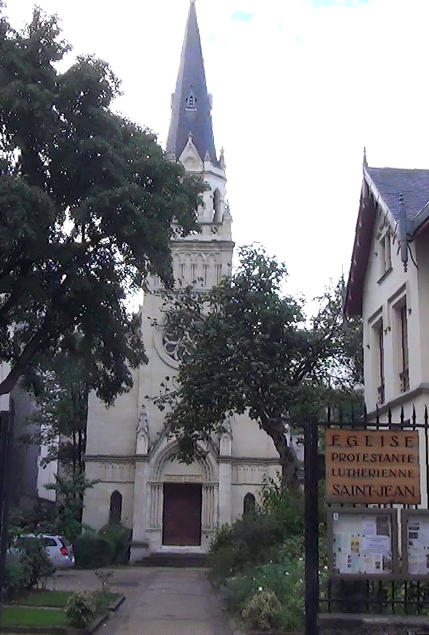
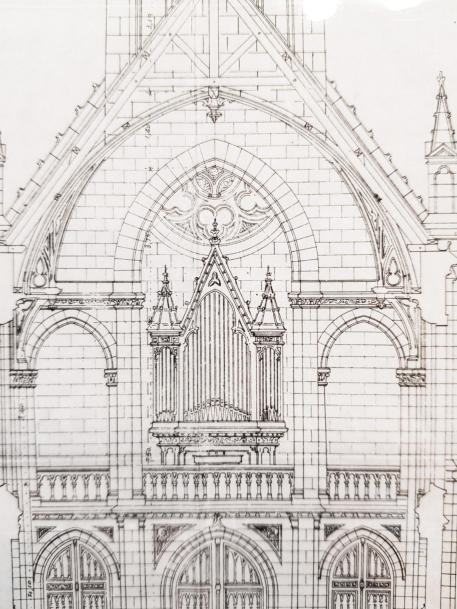
The religious building was built between 1910 and
1911 on the plans of Naville and Choquet, authors
of several Lutheran ensembles in Paris, in a style
inspired by the neo-Gothic, which was fashionable
during the second part of the 19th century for
religious buildings.

Titular organist
Gunhild Wolff
Parish website
Videos
Gunhild Wolff
Photos
Buffet : Vincent Hildebrandt
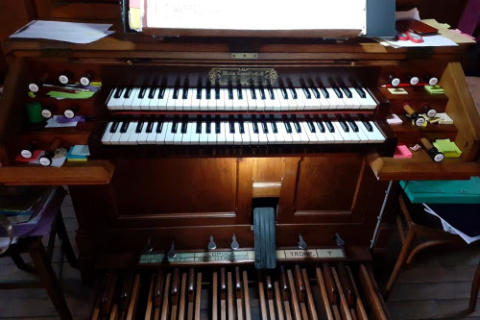
Console : Victor Weller
1911 - Mutin (1)
1967 - Müller (6)
1982 - Barbéris (6)
2016 - Fossaert (5)
II/13 (12) - transmission mécanique
Composition








Organs of Paris


ORGANS OF PARIS © 2026 Vincent Hildebrandt
C1
Built by the firm Cavaillé‑Coll / Mutin in 1910–1911, the
instrument remained entirely authentic until 1967, when
Erwin Müller added a Plein‑Jeu IV ranks.
In 1982 the organ builder Barberis carried out a major
overhaul of the instrument, which has been remarkably
preserved.
In 2016 the organ was restored by Yves Fossaert.
1911 - Mutin (1)
1967 - Müller (6)
1982 - Barbéris (6)
2016 - Fossaert (5)
II/13 (12) - transmission mécanique
Composition